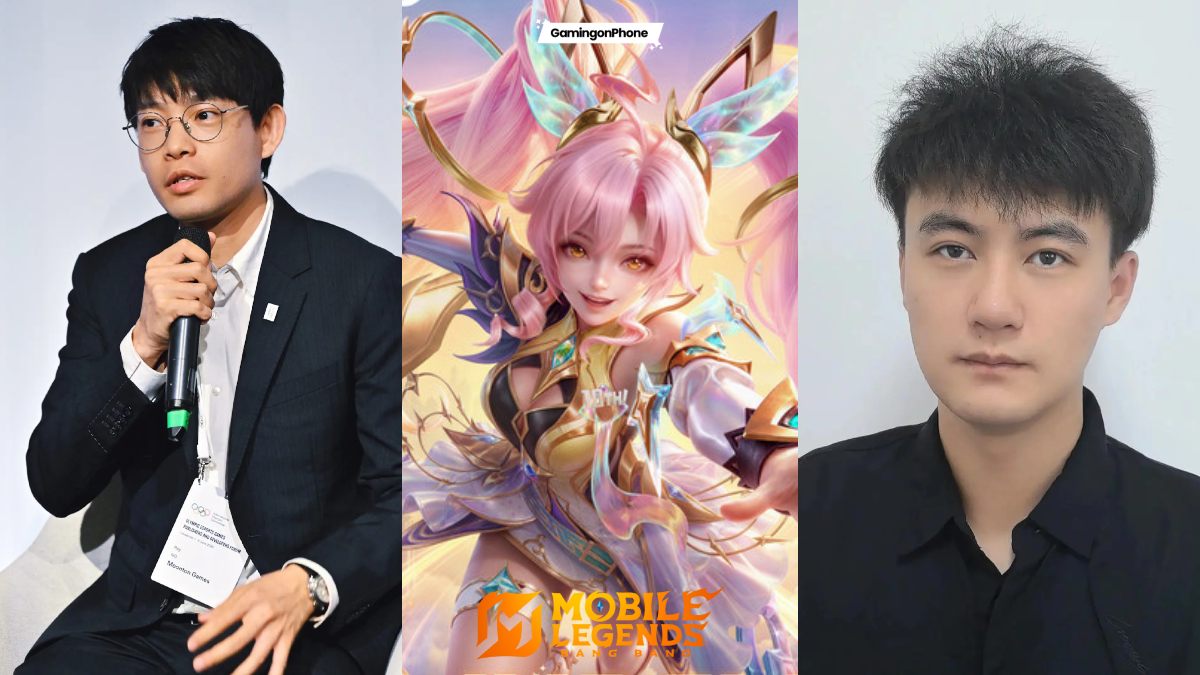
- Hailong Quan shares how MLBB balances global growth, localisation, and long-term gameplay evolution.
- He explains how regional heroes, campaigns, and community feedback shape MLBB’s international appeal.
- – Ray Ng discusses mobile esports growth, international tournaments, and commercial partnerships with global brands.
Mobile Legends: Bang Bang (MLBB) has come a long way since its launch in 2016. What began as a mobile MOBA with just 10 heroes has grown into a global live-service game with 133 heroes, more than 1.5 billion installations, and an esports ecosystem that now reaches audiences across multiple continents.
But keeping a game relevant for a decade takes more than adding new heroes and updates. It means understanding how players in different markets connect with it, keeping the experience fresh without losing its identity, and building communities that extend beyond the game itself.
As MLBB approaches its next decade, we spoke with two people from MOONTON Games to understand what goes into sustaining that growth. Hailong Quan, Head of Battlefield Business, discussed the game’s product evolution, global expansion, localisation, and what the team has learned from its first ten years, and Ray Ng, Head of Esports Ecosystem, shared how competitive events are helping MLBB reach new audiences and turn mobile esports into a sustainable business.
Growing beyond Southeast Asia and the mobile-first audience
MLBB began with the aim of bringing a competitive MOBA experience to mobile players without making it difficult to get into. That balance between accessibility and depth has remained important as the game expanded beyond Southeast Asia.
Hailong says the team soon realised that making the game accessible was only one part of building a lasting audience. Players also wanted their own communities and cultures to have a place in the game. So, while MLBB continued to offer one shared global experience, the team started creating more local connections through heroes, campaigns, and collaborations.
He brings up Lapu-Lapu in the Philippines, Badang in Malaysia, and Gatotkaca in Indonesia as examples of heroes inspired by regional legends. There are also campaigns such as Golden Month in Malaysia and Indonesia, along with the Jollibee partnership in the Philippines.
With more PC and console publishers entering mobile gaming, emerging markets in Latin America and MENA are becoming increasingly important. We asked Hailong what mobile-native games like MLBB bring to these regions, and whether publishers sometimes underestimate what mobile players expect.
He sees the advantage in how naturally mobile fits into people’s lives. Players do not need a dedicated setup to join a match with friends, follow a tournament, or become part of a community. But he is quick to point out that mobile players are not just looking for convenience.
“What can be underestimated is how sophisticated mobile-first audiences are. They are not simply looking for convenience. They care about competition, mastery, content, creators, social connection, and the feeling that the game understands their community. A player may begin by downloading a game because it is easy to access, but they stay because they find a hero they enjoy, a squad to play with, or a competitive scene they want to follow,” Hailong explains.
That also explains why “scale should not be confused with sameness”. The core of a global game needs to stay consistent, but the team has to understand how different communities play and what makes them feel connected.
A decade of changes to MLBB
Going from 10 heroes in 2016 to 133 in 2026 is quite a change. With so much added over the years, we wanted to know how the team decides what needs a complete overhaul and what should stay familiar.
Hailong says the starting point is always MLBB’s identity: accessible competition, teamwork, memorable heroes, and gameplay that is easy to pick up but rewarding to master. From there, player feedback and gameplay data help the team decide where changes are needed.
“When we consider a major update, we look at both player feedback and gameplay data. We assess how a hero, mechanic, or system performs across different skill levels and game modes, whether it still feels satisfying to use and fair to play against, and whether it continues to meet players’ expectations,” he shared.
Sometimes that means visual improvements or clearer gameplay information. In other cases, the team needs to make more fundamental changes. The Vexana revamp is a good example, as it was the game’s first comprehensive, reconstruction-level rework, transforming both her visual identity and overall gameplay experience.
“The goal is not change for its own sake,” Hailong says. The idea is to keep MLBB fresh without taking away what players already “recognise and love”.
Keeping the game accessible without losing depth
A game with a decade of content has to work for newcomers and players who have spent years mastering it. That is not always an easy balance, especially when new heroes, modes, and systems continue to arrive.
For Hailong, it is not about choosing one group over the other. New players need to understand what is happening, contribute to a match, and feel that they can improve. Veteran players, meanwhile, need strategic depth, mastery, and a competitive environment that continues to challenge them.

The team works on making hero identities, essential gameplay information, and mechanics easier to understand at a glance. Performance across a wide range of devices is also part of that effort. At the same time, the layers of timing, decision-making, coordination, and hero mastery need to remain.
He also brought up Battlefield Draft, which is one example of how the team accounts for different skill levels. “A healthy live-service game should not become simpler as it grows. It should become easier to enter, while retaining enough depth for players to keep discovering new ways to improve.”
Project NEXT and legacy hero revamps
Project NEXT has focused on refreshing existing parts of MLBB, but how does the team know when an older hero or system actually needs an overhaul?
Hailong shares that there are several things to look at, including how long a hero has gone without an update, gameplay performance, player usage, and feedback from different skill levels. If players say a legacy hero feels outdated or difficult to use, the team looks further into where they are facing problems rather than relying on a single data point.
That could mean checking how the hero performs in different settings, identifying specific pain points, or looking at whether the mechanics and visual identity still deliver what players expect.
And the work does not end when an update goes live. The team continues to monitor gameplay performance and player perception to see how the changes are being received.
His conclusion for the question was: “The aim is not simply to increase usage or change the meta; it is to create long-term improvements that make the experience healthier and more enjoyable for the wider player base.”
Localisation beyond translation and entering new markets
We also got into localisation, which is something MOONTON has often described as more than simply translating the game. Hailong puts it quite simply: “For us, localisation starts with listening, not translation.”
The team works with local publishing teams, community partners, creators, and players to understand how people in different markets discover MLBB and connect with one another. Gameplay data also helps identify what cultural references feel relevant to each community.
Kalea is one example that came up during our conversation. Her design draws on Southeast Asian folklore surrounding legendary sea serpents. That inspiration shaped her visual identity, her connection to the Great Serpent, and her close-combat Support playstyle. It is a good example of cultural inspiration becoming part of a hero’s identity.
The same thinking goes into marketing. MLBB keeps one shared global experience, but campaigns, creator partnerships, community activities, and collaborations can be adapted to individual markets. The Jollibee partnership in the Philippines is a nice example of connecting the game with something familiar to local players.
MLBB has a strong foundation in Southeast Asia, but its presence in Latin America, MENA, and Europe continues to grow. We asked Hailong what changes when the team enters a market where the game is less established.
He says the first thing is understanding the community instead of assuming that the same approach will work everywhere. How players discover games, what they expect from a MOBA, which creators they follow, and where they gather can all be different.
Local publishing teams, creators, and community partners help the team understand what players need and how MLBB can build a place in that market. The core experience, however, should not change from one region to another.
“What remains consistent is the core MLBB experience: accessible and fair gameplay, teamwork, memorable heroes, and a game that rewards players as they improve.”

Making the 10th anniversary count
MLBB’s 10th Anniversary celebrations span 10 countries across three continents, so plenty was around the milestone. But we wanted to look beyond the celebrations themselves and understand how an anniversary campaign can help keep a community connected in the long run.
Hailong explains that ALL IN MLBB was designed as a thank-you to the players who have been part of the game’s first decade, while also welcoming returning and newer players into its next chapter.
The campaign brought together hero revamps, a free collector skin, content updates such as Nana’s new Epic Skin and Layla’s Stellar Gala, and rewards, along with offline celebrations involving players, creators, esports talent, and fans across different markets. Those in-person experiences matter because a player’s connection to MLBB is often built around more than individual matches. Squads, friendships, shared memories, and community moments all play their part.
Hailong had a heartfelt quote to share: “An anniversary can create attention, but its longer-term value depends on whether players feel that it recognises their place in the game’s journey.” For the team, the real measure is what players take away after the celebrations are over: stronger connections with the game and one another, and the feeling that they still have a place in what comes next.
The next five years of MLBB
After a decade of growth and more than 1.5 billion installations, keeping MLBB relevant is a different challenge from building its audience in the first place. We asked Hailong what he sees as the biggest challenges and where the team has room to grow.
He points to the need to keep evolving without losing the reasons players connected with MLBB in the first place. That means improving accessibility and performance, continuing to develop heroes and gameplay, and making sure both new players and long-time fans can find value in the experience.
Maintaining local relevance at a global scale is another challenge. Reaching more markets is one thing, but the game also needs to keep understanding the interests and communities of the people playing it.
There are opportunities to build on what players have already created around MLBB, too. Hailong mentions stronger communities, more ways to experience the game, broader esports pathways, and new connections between players across regions, where he shares: “The next phase is not simply about reaching more people. It is about growing with them.”
Building with players and connecting with them
Before wrapping up our conversation with Hailong, we asked what other mobile game developers could take away from MLBB’s 10-year journey. His answer came back to the people who have supported the game throughout its growth, sharing “players should not be treated only as an audience”.
He believes developers should look beyond treating players as an audience for the finished product. Players shape how a game is experienced and become part of its culture over time, whether that is through connecting with a squad, supporting a team, creating content, or taking part in a local community activity.
“Players are not passive recipients of the experience; they help shape its culture and give it meaning over time. For MLBB, that means continuing to build with players, not simply for them. As we enter the next decade, our responsibility is to make sure players remain part of how the game is experienced, understood, and shaped.”
Esports as a growth engine
MLBB’s competitive scene has become a major part of its global presence. The M7 World Championship reached 5.68 million peak concurrent viewers, MSC has expanded to Paris, and the M8 World Championship Finals are heading to Istanbul. We then turned to Ray to discuss how esports contributes to the game’s growth, particularly in markets where MLBB is still building its presence.
Ray sees esports as something that gives players and communities a reason to look beyond their own matches. It creates player stories, rivalries, local heroes, and international moments that can bring fans closer to the game.

Major events can introduce MLBB to new audiences, teams, media, and partners, but Ray makes an important distinction: an event by itself does not create a lasting ecosystem.
Paris was significant not only because it brought MSC and MWI to Europe for the first time, but also because Team Spirit’s victory showed what can happen when newer regions have real opportunities to compete.
That is why MOONTON also focuses on grassroots competitions, domestic leagues, community engagement, and clear pathways for regional talent to reach the world stage. In newer markets, these opportunities give people a reason to discover MLBB, while existing players have more reasons to stay connected as the local scene develops.
Turning mobile esports into commercial value
With major commercial partners showing interest in mobile esports, we also spoke with Ray about what has changed in how global brands view the space. Visa extending its partnership with MLBB through 2029 is one example of that growing confidence.
Ray believes the conversation has moved beyond whether mobile esports can attract large audiences. The M7 World Championship reached 5.68 million peak concurrent viewers, becoming the most-watched mobile tournament in history. It also generated €158.39 million in brand value for partners, according to a joint study with Shikenso Analytics.
Those numbers certainly help explain why brands are paying closer attention. But as Ray points out, audience scale alone is not enough, and “Sustainable commercial value requires a consistent and professionally operated ecosystem.”
That means reliable tournaments, strong teams and talent, clear regional pathways, engaged communities, and experiences that give partners a meaningful way to participate. Visa’s long-term partnership reflects that confidence, but MOONTON still needs to show that the ecosystem can grow in a stable and credible way.
For more Mobile Gaming news and updates, join our WhatsApp Channel, Telegram Group, or Discord server. Also, follow us on Instagram, Twitter and Google News for quick updates.
News
Berita Teknologi
Berita Olahraga
Sports news
sports
Motivation
football prediction
technology
Berita Technologi
Berita Terkini
Tempat Wisata
News Flash
Football
Gaming
Game News
Gamers
Jasa Artikel
Jasa Backlink
Agen234
Agen234
Agen234
Resep
Cek Ongkir Cargo
Download Film